
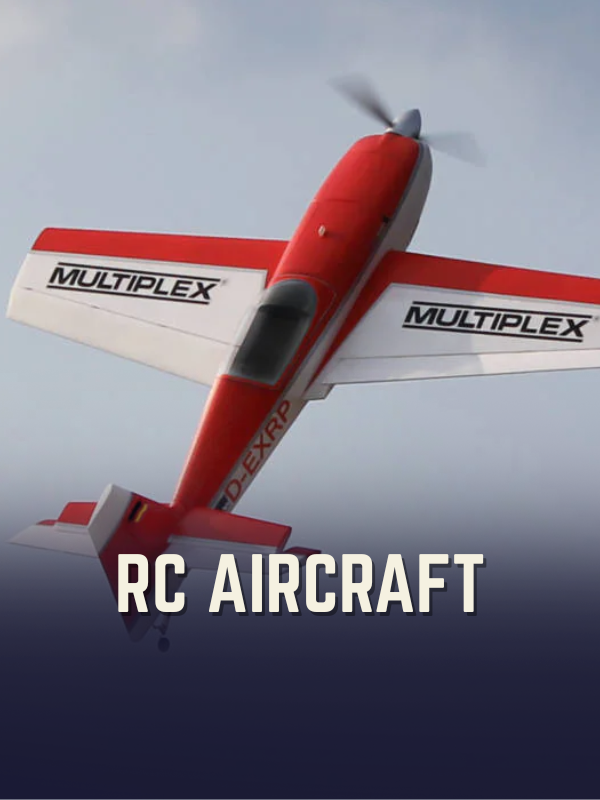
Entering the world of RC aviation combines the precision of scale modelling with the thrill of flight. Whether you're a seasoned builder looking to take your models airborne or a newcomer to radio-controlled aircraft, this guide will help you select the right plane and equipment for a successful first flight.
Understanding RC Plane Categories
Trainers: Your Foundation for Flight
Trainer aircraft feature high-wing configurations, dihedral wing angles, and forgiving flight characteristics. These designs provide inherent stability, making them ideal for learning basic controls: throttle, elevator, rudder, and ailerons. Look for models with durable EPO foam construction that can withstand the inevitable learning bumps.
Sport Planes: Building Your Skills
Once you've mastered straight-and-level flight and basic turns, sport planes offer increased performance and aerobatic capability. Mid-wing designs and symmetrical airfoils allow for loops, rolls, and inverted flight while maintaining reasonable stability.
Scale Warbirds: Where Modelling Meets Flight
For scale modellers, RC warbirds deliver authentic detail with functional flight performance. Spitfires, Mustangs, and Corsairs combine accurate panel lines, rivets, and liveries with reliable flight characteristics. Many feature scale retracts, flaps, and sequenced gear doors for maximum authenticity.
Jets & Advanced Aircraft
EDF (Electric Ducted Fan) jets and high-performance aircraft require experienced piloting. Higher wing loading and faster flight speeds demand quick reflexes and confident control inputs. These are best approached after mastering slower, more forgiving designs.
Essential Equipment: What You'll Need
Radio System (Transmitter & Receiver)
A quality 2.4GHz radio system with at least 4 channels is essential. Modern systems offer reliable range, interference-free operation, and programmable mixing for advanced setups. Budget for a transmitter you can grow with—many support 6+ channels for future aircraft with retracts, flaps, and lights.
Power System: Batteries & Chargers
LiPo (Lithium Polymer) batteries provide the power density needed for electric flight. Match battery capacity (mAh) and cell count (voltage) to your aircraft's specifications. Invest in a quality balance charger with storage mode to maintain battery health and safety.
Field Equipment
Beyond the aircraft, you'll need a flight box or bag for tools, spare props, battery checker, and field repairs. A portable charging solution extends your flying sessions, while a flight log helps track battery cycles and maintenance.
RTF vs. ARF vs. Kit: Choosing Your Build Level
RTF (Ready-to-Fly): Complete package with radio, battery, and charger. Ideal for immediate flying with minimal setup.
ARF (Almost-Ready-to-Fly): Requires separate radio system and sometimes motor/ESC installation. Offers flexibility in component choice and lower cost if you already own radio gear.
Kit: Complete build experience from bare components. Perfect for modellers who enjoy the construction process and want maximum customization.
Flight Characteristics: What to Expect
Successful RC flight depends on understanding your aircraft's behaviour. High-wing trainers are self-stabilizing and recover from control inputs gracefully. Low-wing sport planes respond more directly and require active piloting. Scale warbirds may have scale-accurate flight characteristics including realistic stall behaviour and ground handling.
Wind conditions matter significantly. Begin flying in calm conditions (under 5mph wind) and gradually build experience in breezier weather. Morning and evening sessions often provide the smoothest air.
Safety & Best Practices
- Join a local flying club for access to safe flying sites and experienced mentors
- Perform pre-flight checks: control surfaces, battery voltage, range check, and CG (centre of gravity)
- Maintain line-of-sight and avoid flying over people or property
- Check local regulations and airspace restrictions before flying
- Keep batteries in LiPo-safe bags and never leave charging unattended
Recommended First Aircraft
For absolute beginners, a high-wing trainer with 3 or 4 channels provides the most forgiving introduction. Models with AS3X or gyro stabilization offer additional assistance while you develop muscle memory for control inputs.
Experienced modellers transitioning from static builds may prefer a scale warbird with trainer-like characteristics—slower flight speeds, generous wing area, and stable handling that forgives minor control errors.
Next Steps: Your RC Journey
Browse our Remote Control Planes collection to explore aircraft suited to your skill level and interests. Our team can provide technical guidance on setup, component compatibility, and flight preparation.
Ready to take flight? Start with the right aircraft, invest in quality equipment, and join a community of pilots who share your passion for aviation and scale modelling.