Choosing a first model train set is much easier when you separate the decision into three questions: how much space you have, who the set is for, and whether you want a simple starter railway or a layout that can grow over time.
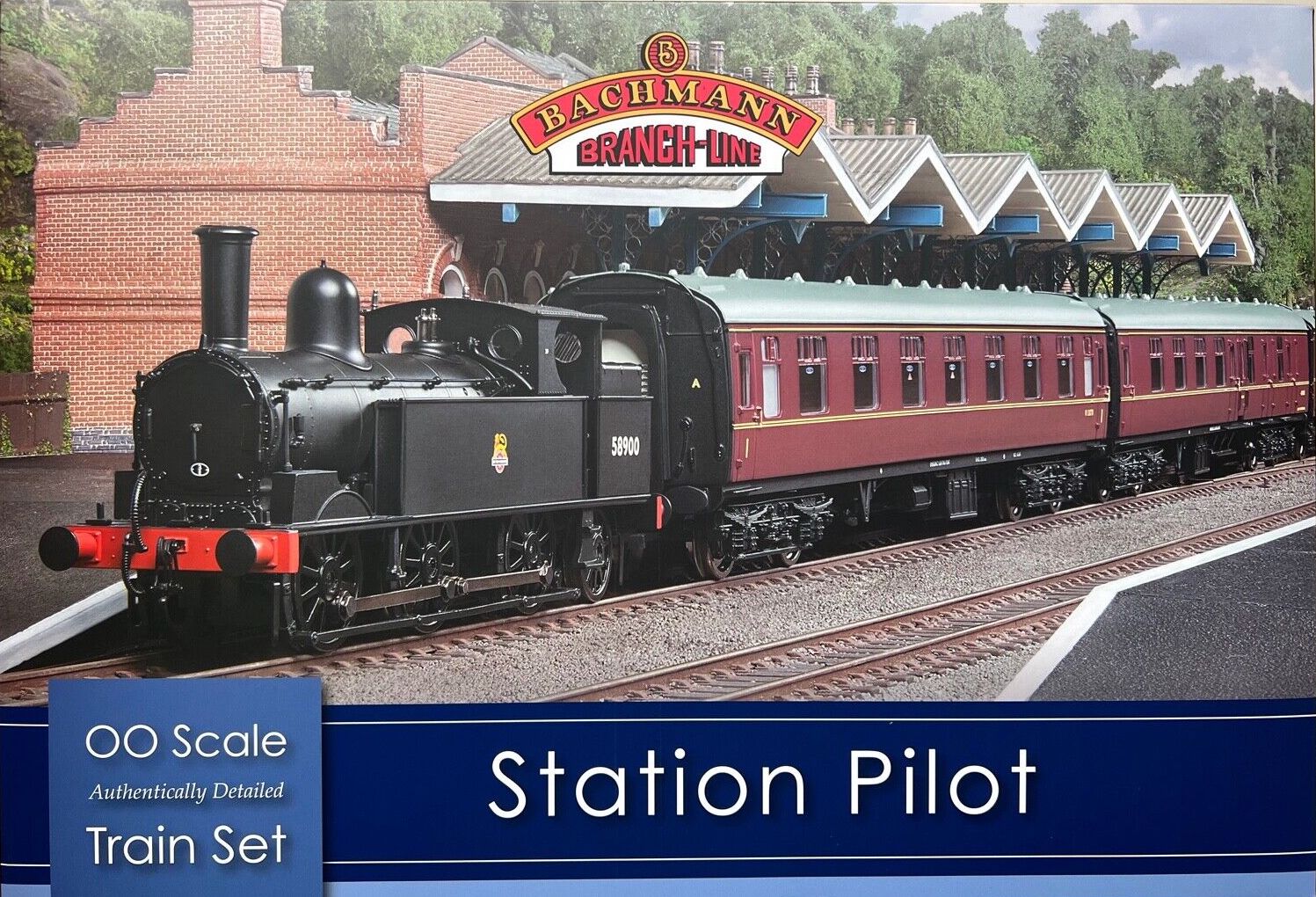
For most UK beginners, a complete boxed train set is the best starting point. It gives you a locomotive, rolling stock, track and a controller in one package, so you can learn the basics before spending more on track, scenery, buildings or extra trains.
Quick recommendation
If you are buying your first train set, start with OO gauge unless space is very limited. OO gauge is easier to handle, widely supported in the UK, and gives beginners the broadest choice of track, scenic accessories, locomotives and rolling stock.
What makes a good beginner model train set?
A good beginner train set should be reliable, easy to assemble, and compatible with future expansion. The first set does not need to be the biggest or most advanced option. It should help the new modeller get a train running quickly and then make it simple to add more track, buildings and scenery later.
The main things to check are:
- Scale and gauge: this determines the size of the trains and the space needed for the layout.
- Included contents: a starter set normally includes track, a controller, a locomotive and rolling stock.
- Expansion options: look for standard track systems that can be extended later.
- Ease of handling: smaller models save space but can be more fiddly.
- Long-term interest: choose a theme the modeller will still enjoy once the first oval is built.
OO gauge or N gauge for beginners?
OO gauge is usually the safest first choice for UK beginners. The models are large enough to handle comfortably, the range is broad, and there are plenty of compatible accessories for creating a realistic layout. It is also the scale many people recognise from Hornby-style starter sets.
N gauge is better when space is tight. Because the models are smaller, you can fit a longer-looking railway into the same area. The trade-off is that the trains, couplings and scenic details are smaller, so it can be more delicate to work with.
As a simple rule: choose OO gauge for ease of use and range depth; choose N gauge if the available space is the limiting factor.
Beginner tip: Before buying, measure the space where the railway will run. A set that fits comfortably and can be left assembled will usually be enjoyed more than a larger set that has to be packed away every time.
Best model train set for a child
For a child, the best train set is one that is simple, robust and easy to reset when something comes off the track. Avoid making the first layout too complicated. A basic oval with a controller is enough to teach speed control, direction changes and track assembly.
For younger modellers, adult help will still be useful, especially when connecting track, placing the locomotive correctly and keeping wheels and rails clean. The aim should be enjoyment first, detail second.
Best model train set for an adult beginner
For an adult beginner or someone returning to the hobby, the best starter set is often one with stronger realism and better expansion potential. Adults usually care more about the type of train, the period, the scale accuracy and how the layout might develop into a permanent project.
An adult beginner may outgrow a very basic train set quickly, so it is worth thinking about the future layout from day one. Consider whether the railway will eventually include a station, goods yard, branch line, countryside scene or modern image layout.
Analogue or DCC for a first train set?
Most first train sets are analogue, meaning the controller changes the speed and direction of the train on the track. Analogue control is straightforward and is usually the easiest way to start.
DCC, or Digital Command Control, allows more advanced control of multiple locomotives on the same layout. It can be excellent for larger layouts, but it adds cost and complexity. For a complete beginner, analogue is normally simpler unless the modeller already knows they want to build a more advanced railway.
What should you buy after the first set?
Once the basic train set is running, the best first upgrades are the ones that make the railway more interesting without making it difficult to manage.
- Extra track: add a siding, passing loop or larger oval.
- Points: allow trains to move between sidings and routes.
- A station or platform: gives the layout a purpose.
- Basic scenery: grass, ballast, trees and figures make a simple layout feel alive.
- Extra wagons or coaches: create more operating variety.
It is better to add a few useful pieces gradually than to buy everything at once. Beginners learn faster when each upgrade has a clear purpose.
Beginner buying checklist
Before choosing a model train set, check the following:
- Does the scale suit the space available?
- Is the set complete enough to run without extra purchases?
- Can the track be expanded later?
- Are compatible accessories easy to find?
- Is the model size suitable for the person using it?
- Does the train theme actually interest the beginner?
- Will the layout be temporary or permanent?
Common beginner mistakes to avoid
- Buying too much too soon: start simple and expand once the basics are understood.
- Ignoring space: the available area matters more than the size of the box.
- Choosing the wrong scale: OO gauge is easier to handle; N gauge is better for compact layouts.
- Skipping track care: clean track and clean wheels make a big difference to reliability.
- Building without a plan: even a rough idea helps avoid awkward track layouts later.
Frequently asked questions
What is the best model train set for beginners?
For most UK beginners, a complete OO gauge starter set is the best first choice because it is easy to handle, widely supported and simple to expand with extra track, scenery and accessories.
Is OO gauge or N gauge better for a beginner?
OO gauge is usually better for ease of use. N gauge is better if space is limited, but the smaller size can make handling, coupling and detailing more fiddly.
Are model train sets suitable for adults?
Yes. Many adults start with a boxed train set before developing a larger layout. Adults often choose sets based on realism, period, railway company or future expansion potential.
Do I need DCC for my first train set?
No. Analogue control is normally simpler for a first train set. DCC is useful for more advanced layouts but is not essential when learning the basics.
What should I add first to a starter train set?
Extra track, points, a station area and basic scenery are usually the most useful first upgrades because they make the layout more interesting without overcomplicating it.
Ready to plan your first model railway?
Start with the scale, space and expansion path, then choose a set that keeps the hobby enjoyable beyond the first oval.
Browse Model Railways →